
THE MYTH OF AFTERNOON TEA — AND WHAT HISTORY ACTUALLY SAYS
The most famous version of the story goes like this: in the 1840s, Anna Maria Russell, Duchess of Bedford, felt a "sinking feeling" in the late afternoon, because dinner had, thanks to industrialization and gas lighting, shifted later and later, sometimes to as late as nine in the evening. She had tea, bread, and butter brought to her room, and Afternoon Tea was born.
It's a good story. It's also probably not entirely true.
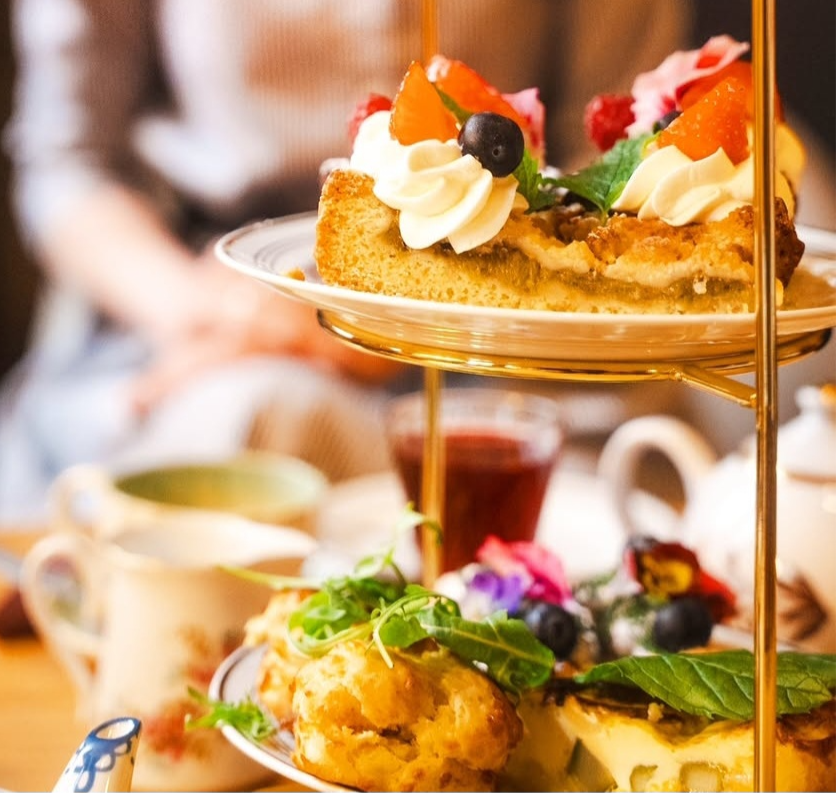
When myth meets history
A closer look at the historical record tells a different story. English spa towns like Bath and Harrogate were already serving "Afternoon Teas" in the 1750s and 1760s, nearly a century before the Duchess. When Queen Victoria wrote in her diary in 1845 that she'd enjoyed tea "quite in the German way" with excellent cakes, she made no mention of "the Bedford way," odd, if the Duchess had truly just invented the whole tradition.
So why does the story persist? Because people love a clean origin story, even when the truth is messier, and less glamorous.
Turku's own version: coffee as a banned substance
While British tea culture was taking shape, Turku was fighting its own, equally colorful battle with a hot drink, coffee, not tea. Coffee culture arrived in Finland via Stockholm in the 1740s, and quickly spread to Turku as well.
Authorities weren't thrilled. Coffee was banned in the Kingdom of Sweden four times during the latter half of the 1700s. There were two main reasons. First, economic: under mercantilist policy, coffee imports were seen as draining money out of the country. Second, and more amusingly, coffee was believed to have an "intoxicating" effect, thought to heighten people's urges and cause harmful consequences.
The bans didn't work. By the end of the century, roughly ten coffeehouses were operating in Turku, and the smell of coffee, it's said, lingered over the city regardless of the law.

Two stories, the same craving
The British tea ritual and Turku's coffee culture are, at heart, the same story told in different languages: both grew out of a need to pause for a moment together, over a cup. It's a need that has proven more stubborn than any ban or official story.
Café Victor's Afternoon Tea doesn't try to be a historically "authentic" copy of 1800s England, it's our own interpretation of the tradition: three savory and three sweet handmade bites, always including a scone with jam and whipped cream, a macaron, and finger sandwiches, served with quality coffee or brewed tea, inside Turku Art Museum's granite palace.
Maybe that's exactly why this tradition has lasted: it was never just one duchess's story or habit, or one city's, to begin with.

Comments